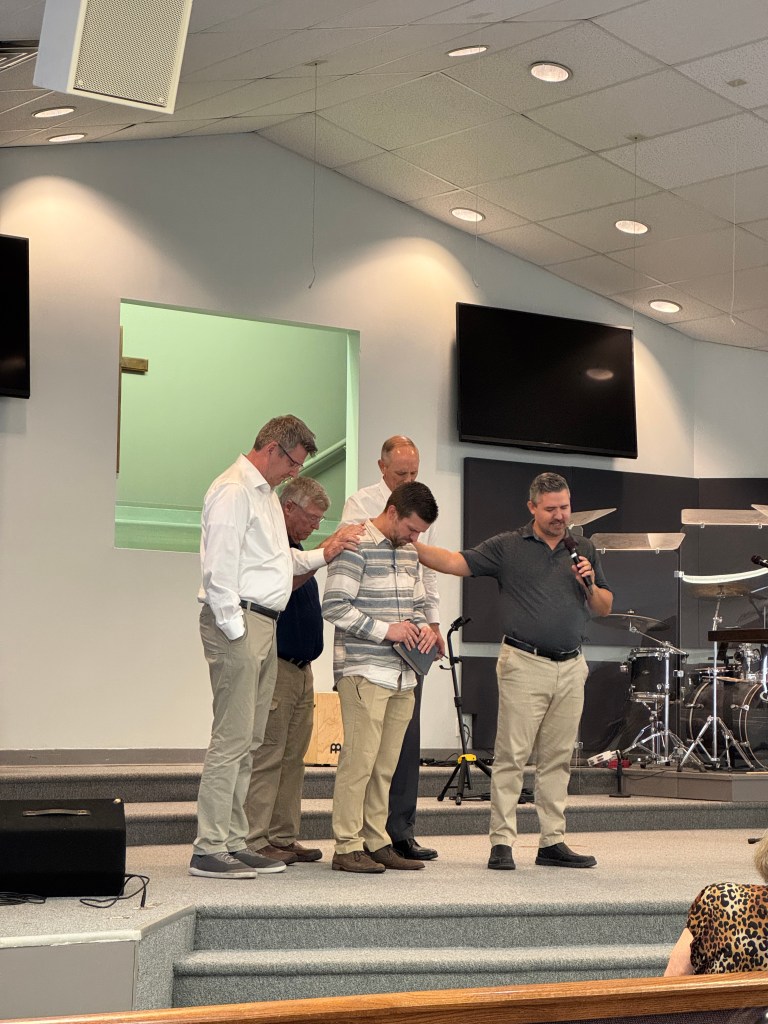
I know some pretty great people in leadership positions. I think this is the case for most people. Who comes to mind when you think of an impactful leader in your life? Have you thought of a person? Good. Now, think about what made this person so impactful. Maybe it was a school teacher that took a chance on you. For some it may be a manager that was a pleasure to work for. Of the people that come to mind, I find that often there are overlapping characteristics that help individual leaders stand out from among the crowd.
As I consider the various leadership roles I have had and currently serve in, I feel a burden to not only be faithful to the Lord as I lead, but to do so in a way that is beneficial for those under my care and authority. This is not to say that I possess any special gifting or ability to lead others. In fact, many of the principles I have learned about leadership have come through making mistakes and learning from them. Because of this, I would argue that one of the best and most impactful qualities a leader can have is simply: humility.
Have this attitude in yourselves which was also in Christ Jesus, who, although He existed in the form of God, did not regard equality with God a thing to be grasped, but emptied Himself, taking the form of a bond-servant, and being made in the likeness of men. Being found in appearance as a man, He humbled Himself by becoming obedient to the point of death, even death on a cross.
Philippians 2:5–8 NASB95
The entirety of Jesus’ ministry on earth was marked by humility. From His conception as a baby in the womb, we begin to see how the God-man made decision after decision that would ultimately lead to His death by the hands of those He sought to save. Yet not once do we see Jesus losing focus of His mission or finding shortcuts to limit the hardship He would go through. Instead, Jesus submitted to all that was set out before Him, remaining silent throughout both unfair trial and beating (1 Pet. 2:23). When I think about the leadership example set by Jesus, a few questions about my own leadership come to mind. These questions highlight principles I have sought to implement at all times, whether leader or bottom of the totem pole. This is not to say I do these things perfectly, but acknowledgment of shortcomings is typically one of the first step in substantial growth.
Who is mentoring me?
This first question comes to mind in large part because I have seen noticeable impact that a spiritual mentor can have as they speak life into another individual. At every stage of life, there is great benefit to seeking companionship from those who have been through whatever you find yourself going through. For some this looks like receiving mentorship from a parent or other guardian. Others may seek the guidance of their pastor or another spiritual leader in their church. If you cannot think of who it is that could be a mentor to you then I recommend you ask yourself: who already has a voice to speak truth into my life? Is there a possibility that they or someone they recommend could meet with me to begin a mentorship relationship? As you choose who this person might be, one thing to keep in mind is Hebrews 13:7 which says, “Remember those who led you, who spoke the word of God to you; and considering the result of their conduct, imitate their faith.”
Although longterm mentorship is ideal, it is true that as a person grows, they will tend to need less help on most things. However, when it comes to leading well, there is great wisdom in allowing others to speak into your life. When you were a kid your parents, a teacher, or maybe even a relative were the most likely to serve as a form of mentor to you. This means they taught you various life skills and to think about your potential. Whoever this person was, it becomes likely that as you grow, mentorship may need to come from elsewhere. This is not to say that these individuals did not invest valuable time, but—in most cases—there comes a time when your third grade Sunday School teacher (to name one example) has nothing more to offer you.*
As we grow up, our mentorship needs will also grow. I no longer look to the college age individuals teaching my 7th grade Sunday School class, individuals this age are now my peers. Instead, I tend to look for the men who are married, with kids, and have been faithfully serving in ministry longer than I have been alive.
If you cannot think of the last time you have had someone speaking into your life, you are long overdue. To have others who can give you honest, and even critical feedback is more valuable than you will ever know. Think of all that King David was able to accomplish because he had Joab and the prophet Nathan speaking into his life. Who are the people on your team that can speak the hard truths to you? If no one comes to mind, it is time to recruit some people. You do not have to ask the first person you think of; in fact, I would hesitate to ask anybody without first getting to know them (Heb. 13:7).
Who has open and direct access to me?
This question is especially important for leaders to ask as they seek to avoid temptations toward pride and other sins that tend to reoccur whenever accountability lacks for long periods. This is not to say that if you do not have someone holding you accountable, you are guaranteed to give into sin every time you are tempted. However, just because you won’t die for not wearing a seatbelt during a car crash doesn’t mean you shouldn’t wear one every time you get in the car. You may be right about not dying, but all it takes is one potentially fatal crash to see the need to buckle up.
Accountability works in much the same way. It is not a guarantee that you will not continue to sin. But you can be sure that accountability produces a natural trajectory away from sinful situations. While Joab may not have called David out for not going to war when he should have, which led to his sin with Bathsheba, the prophet Nathan had access which allowed him to confront King David after he sinned (2 Sam. 11–12). This encounter between Nathan and David gave the king enough accountability to see that he had sinned and led to genuine repentance (Ps. 51). Had David limited access to himself, he may have never understood the full extent of his sin which would have continued to affect his ability to lead God’s people.
This is not to say that you need to let just anyone have a voice in your life, but leaders should be careful that they do not view people as outsiders. This is a slippery slope that can lead to sinful practices and unchecked attitudes that are never addressed because they are justified by the leader and the few “yes men” they allow into their social bubble.
How have I actively sought accountability over the past year?
This is the final question that comes to mind when I consider Christians in leadership and the model Jesus set while on earth. The point of this question is to cause each of us to make time for self reflection. If you cannot think of any point in the past year in which you had a sit down meeting with a spiritual mentor so they could you about anything you might be working through, then it has been too long. I think most Christians would agree that accountability is vital to the Christian life (we were never meant to do it all alone), but I still see many who fall with no one around to help them back up, let alone help them keep from falling in the first place.
Two are better than one because they have a good return for their labor. For if either of them falls, the one will lift up his companion. But woe to the one who falls when there is not another to lift him up. Furthermore, if two lie down together they keep warm, but how can one be warm alone? And if one can overpower him who is alone, two can resist him. A cord of three strands is not quickly torn apart.
Ecclesiastes 4:9–12
Concluding Thoughts
How Christians seek accountability matters just as much as that they actually have it in the first place. When you are young, you need someone to show you the way. As you get older, there never comes a point where you know so much that you have nothing left to learn. This may seem daunting or depressing, but really it should be freeing since it takes the pressure of expectation off. At every phase of life, we need mentorship and others speaking into our lives.
This is not to say that you get a free pass to stop caring about your personal walk with the Lord. Ultimate responsibility for your salvation is between you and the Lord. No one can force you to submit to accountability, but if you realize you are pushing against it, maybe it is time to consider why. If it is because those speaking into your life do not hold Scripture as inerrant and authoritative, that is one thing. But if you disregard wisdom from others because it means you have to change something in your life, then the problem might be you.
The purpose of this post is not to be a beatdown for those who do not currently have a spiritual mentor, but to encourage you and show the value that this kind of relationship has to offer. Jesus said, “By this all men will know that you are My disciples, if you have love for one another’” (John 13:35). Love for others means helping them see where they might be falling short (in humility since we are all sinful beings). How much more would you grow in your walk with the Lord in the next year if you spent a few days every month intentionally meeting with someone who is further along in their walk than you are? I cannot tell you how thankful I am for my parents and the men in my life who have mentored me in one way or another. I have grown so much simply because they took time out of their lives to invest in mine. I am a better leader today because I have and am learning what it means to be personally mentored in a God-honoring way.
*There is a current trend in which many adult children are cutting off relationships with their parents/family. While I sympathize with legitimate cases of abuse, I am fully aware that many, if not most, of these instances consist of these now adults rewriting their childhood memories. Through narrative shifting and the changing of key details, parents are being written off as villains in stories that are simply one-sided retellings. Because of this, I feel the need to clarify that biblical principles would suggest that although you may not always seek regular mentorship from your parents, you have a God-given responsibility to honor them.


Leave a Reply